Every day, people generate massive amounts of data through online shopping, social media, mobile apps, wearable devices, and business transactions. However, raw data alone has little value unless it can be transformed into meaningful insights.
This is where data science comes in.
Data science combines statistics, programming, machine learning, and domain expertise to extract valuable information from data and support smarter decision-making.
Whether you’re considering a career in technology or simply want to understand one of the fastest-growing fields in the digital economy, this guide will help you understand what data science is, how it works, and why it matters in 2026.
What Is Data Science?
Data science is an interdisciplinary field that uses scientific methods, algorithms, and advanced analytics techniques to collect, process, analyze, and interpret data.
The primary goal of data science is to identify patterns, solve complex problems, predict future outcomes, and help organizations make data-driven decisions.
Unlike traditional reporting, data science goes beyond answering “What happened?” It also helps answer:
- Why did it happen?
- What is likely to happen next?
- What actions should we take?
Data science brings together several disciplines, including:
- Mathematics and statistics
- Computer science
- Machine learning
- Data visualization
- Business knowledge
Why Is Data Science Important in 2026?
Organizations across industries are investing heavily in artificial intelligence and analytics to stay competitive.
Data science enables businesses to:
- Personalize customer experiences
- Detect fraud and security threats
- Optimize supply chains
- Improve healthcare outcomes
- Automate decision-making
- Forecast demand and revenue trends
From streaming recommendations to navigation apps and virtual assistants, data science powers many technologies people use every day.
As generative AI continues to evolve, the demand for professionals who can manage, analyze, and interpret data is expected to increase significantly.
How Does Data Science Work?
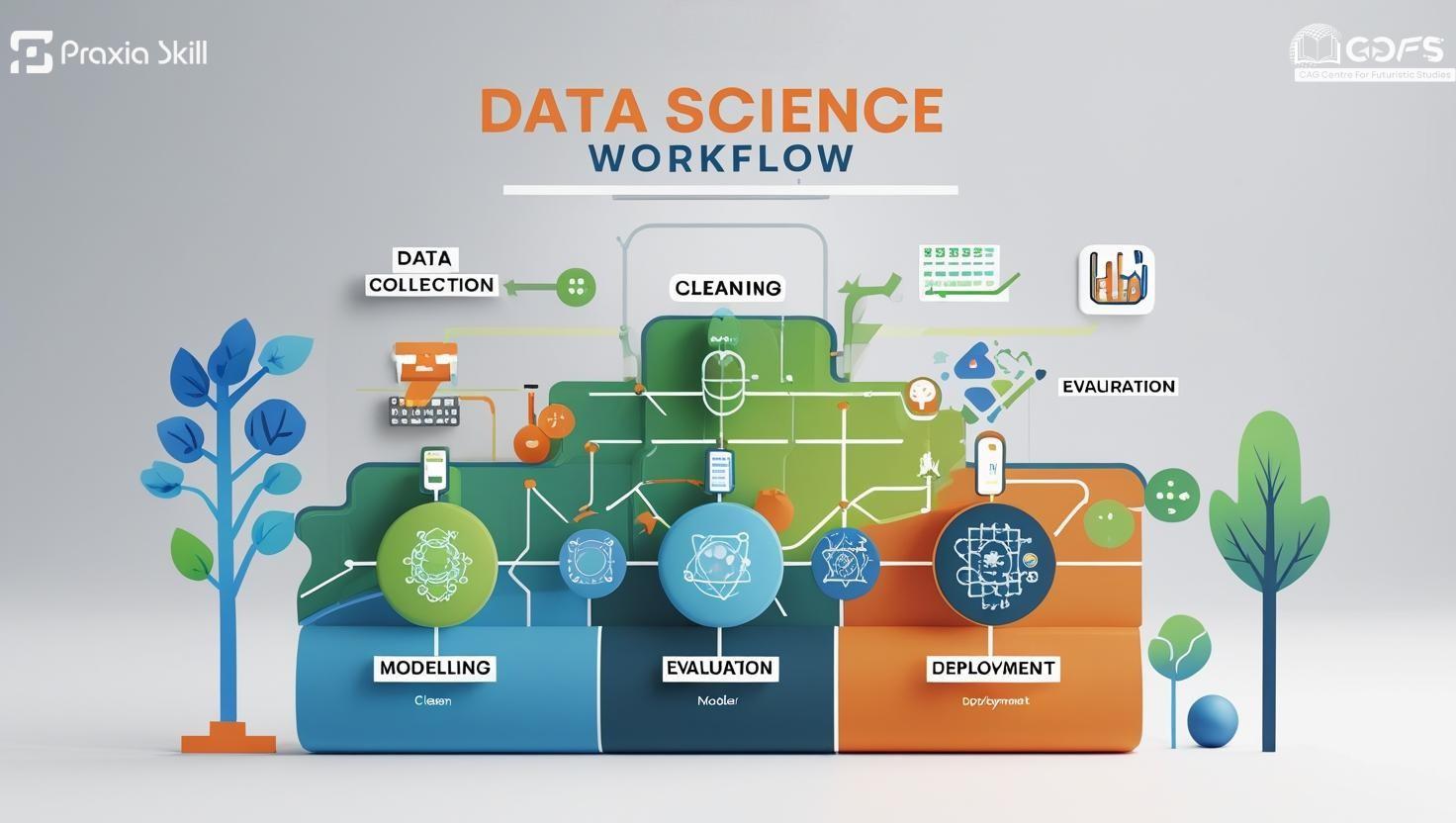
A typical data science project follows a structured workflow:
1. Define the Problem
Start by identifying a clear business objective or question.
Example: Why are customers cancelling their subscriptions?
2. Collect Data
Gather data from various sources, including:
- Databases
- APIs
- Websites
- Sensors
- CRM systems
3. Clean and Prepare Data
Data often contains missing values, duplicates, and inconsistencies. Cleaning data ensures accurate analysis.
4. Explore the Data
Use statistical techniques and visualizations to uncover patterns and relationships.
5. Build Models
Apply machine learning algorithms to predict outcomes or classify information.
6. Evaluate Results
Measure model performance using appropriate metrics and validate the findings.
7. Deploy and Monitor
Integrate the solution into real-world applications and continuously monitor performance.
Key Components of Data Science
Statistics
Statistics helps identify trends, test hypotheses, and quantify uncertainty.
Programming
Programming languages such as Python and R are used to manipulate data and build models.
Machine Learning
Machine learning enables systems to learn from data and improve predictions over time.
Data Engineering
Data engineering focuses on building reliable data pipelines and infrastructure.
Data Visualization
Visualization tools help communicate insights clearly through charts, dashboards, and reports.
Essential Data Science Skills for Beginners
If you’re starting your data science journey in 2026, focus on developing these core skills:
- SQL for querying databases
- Python programming
- Statistics and probability
- Data cleaning and preparation
- Data visualization
- Machine learning fundamentals
- Business problem-solving
- Communication and storytelling
Technical skills are important, but the ability to explain insights to non-technical stakeholders is equally valuable.
Popular Data Science Tools in 2026
Here are some widely used tools and technologies:
- Python — General-purpose data science and ML
- SQL — Querying and managing databases
- Jupyter Notebook — Interactive coding and analysis
- Power BI — Business intelligence dashboards
- Tableau — Data visualization
- Pandas & NumPy — Data manipulation in Python
- Scikit-learn — Machine learning library
- TensorFlow — Deep learning framework
- Apache Spark — Big data processing
Beginners do not need to learn every tool at once. Start with SQL, Python, and one visualization platform.
Data Science vs Data Analytics vs Machine Learning
Although these terms are often used interchangeably, they have different purposes.
- Data Analytics: Focuses on understanding historical data and generating business insights.
- Machine Learning: Develops algorithms that learn patterns and make predictions.
- Data Science: Combines analytics, machine learning, statistics, and engineering to solve complex problems using data.
Think of data science as the broader field that includes both analytics and machine learning.
Real-World Applications of Data Science
Data science is transforming industries worldwide. Examples include:
- Healthcare: Predicting disease risks and improving patient care
- Finance: Fraud detection and credit risk assessment
- Retail: Product recommendations and demand forecasting
- Marketing: Customer segmentation and campaign optimization
- Manufacturing: Predictive maintenance
- Transportation: Route optimization and autonomous vehicles
How to Become a Data Scientist in 2026
Follow this beginner-friendly roadmap:
- Learn SQL and database fundamentals.
- Master Python for data analysis.
- Study statistics and probability.
- Build projects using real datasets.
- Create dashboards with Power BI or Tableau.
- Learn machine learning basics.
- Publish your projects on GitHub.
- Build a portfolio website.
- Participate in online communities.
- Apply for internships or entry-level roles.
Consistency matters more than learning every tool at once.
Final Thoughts
Data science is more than a technical discipline — it’s a way of solving problems through evidence, experimentation, and insights.
As businesses increasingly rely on AI and data-driven strategies, understanding data science will become a valuable skill across almost every industry.
Whether your goal is to become a data scientist, improve your analytical skills, or understand the technologies shaping the future, now is an excellent time to start learning.
The best way to begin is simple: learn SQL, explore Python, work with real data, and stay curious.
This is where data science comes in.
Data science combines statistics, programming, machine learning, and domain expertise to extract valuable information from data and support smarter decision-making.
Whether you’re considering a career in technology or simply want to understand one of the fastest-growing fields in the digital economy, this guide will help you understand what data science is, how it works, and why it matters in 2026.
What Is Data Science?
Data science is an interdisciplinary field that uses scientific methods, algorithms, and advanced analytics techniques to collect, process, analyze, and interpret data.
The primary goal of data science is to identify patterns, solve complex problems, predict future outcomes, and help organizations make data-driven decisions.
Unlike traditional reporting, data science goes beyond answering “What happened?” It also helps answer:
- Why did it happen?
- What is likely to happen next?
- What actions should we take?
Data science brings together several disciplines, including:
- Mathematics and statistics
- Computer science
- Machine learning
- Data visualization
- Business knowledge
Why Is Data Science Important in 2026?
Organizations across industries are investing heavily in artificial intelligence and analytics to stay competitive.
Data science enables businesses to:
- Personalize customer experiences
- Detect fraud and security threats
- Optimize supply chains
- Improve healthcare outcomes
- Automate decision-making
- Forecast demand and revenue trends
From streaming recommendations to navigation apps and virtual assistants, data science powers many technologies people use every day.
As generative AI continues to evolve, the demand for professionals who can manage, analyze, and interpret data is expected to increase significantly.
How Does Data Science Work?
A typical data science project follows a structured workflow:
1. Define the Problem
Start by identifying a clear business objective or question.
Example: Why are customers cancelling their subscriptions?
2. Collect Data
Gather data from various sources, including:
- Databases
- APIs
- Websites
- Sensors
- CRM systems
3. Clean and Prepare Data
Data often contains missing values, duplicates, and inconsistencies. Cleaning data ensures accurate analysis.
4. Explore the Data
Use statistical techniques and visualizations to uncover patterns and relationships.
5. Build Models
Apply machine learning algorithms to predict outcomes or classify information.
6. Evaluate Results
Measure model performance using appropriate metrics and validate the findings.
7. Deploy and Monitor
Integrate the solution into real-world applications and continuously monitor performance.
Key Components of Data Science
Statistics
Statistics helps identify trends, test hypotheses, and quantify uncertainty.
Programming
Programming languages such as Python and R are used to manipulate data and build models.
Machine Learning
Machine learning enables systems to learn from data and improve predictions over time.
Data Engineering
Data engineering focuses on building reliable data pipelines and infrastructure.
Data Visualization
Visualization tools help communicate insights clearly through charts, dashboards, and reports.
Essential Data Science Skills for Beginners
If you’re starting your data science journey in 2026, focus on developing these core skills:
- SQL for querying databases
- Python programming
- Statistics and probability
- Data cleaning and preparation
- Data visualization
- Machine learning fundamentals
- Business problem-solving
- Communication and storytelling
Technical skills are important, but the ability to explain insights to non-technical stakeholders is equally valuable.
Popular Data Science Tools in 2026
Here are some widely used tools and technologies:
- Python
- SQL
- Jupyter Notebook
- Power BI
- Tableau
- Pandas
- NumPy
- Scikit-learn
- TensorFlow
- Apache Spark
Beginners do not need to learn every tool at once. Start with SQL, Python, and one visualization platform.
Data Science vs Data Analytics vs Machine Learning
Although these terms are often used interchangeably, they have different purposes.
Data Analytics: Focuses on understanding historical data and generating business insights.
Machine Learning: Develops algorithms that learn patterns and make predictions.
Data Science: Combines analytics, machine learning, statistics, and engineering to solve complex problems using data.
Think of data science as the broader field that includes both analytics and machine learning.
Real-World Applications of Data Science
Data science is transforming industries worldwide.
Examples include:
- Healthcare: Predicting disease risks and improving patient care
- Finance: Fraud detection and credit risk assessment
- Retail: Product recommendations and demand forecasting
- Marketing: Customer segmentation and campaign optimization
- Manufacturing: Predictive maintenance
- Transportation: Route optimization and autonomous vehicles
How to Become a Data Scientist in 2026
Follow this beginner-friendly roadmap:
- Learn SQL and database fundamentals.
- Master Python for data analysis.
- Study statistics and probability.
- Build projects using real datasets.
- Create dashboards with Power BI or Tableau.
- Learn machine learning basics.
- Publish your projects on GitHub.
- Build a portfolio website.
- Participate in online communities.
- Apply for internships or entry-level roles.
Consistency matters more than learning every tool at once.
Final Thoughts
Data science is more than a technical discipline—it’s a way of solving problems through evidence, experimentation, and insights.
As businesses increasingly rely on AI and data-driven strategies, understanding data science will become a valuable skill across almost every industry.
Whether your goal is to become a data scientist, improve your analytical skills, or understand the technologies shaping the future, now is an excellent time to start learning.
The best way to begin is simple: learn SQL, explore Python, work with real data, and stay curious.